
I want to share something with you that came out of a conversation I had recently with one of my clients.
Sarah – She is a coach. Deeply gifted. Genuinely devoted to the wellbeing of others. And she came to me in quiet distress, not because of her work, but because her family does not accept her.
Because she has always been different, and that difference has never quite been welcomed at home.
As we spoke, she revealed something that gave me pause.
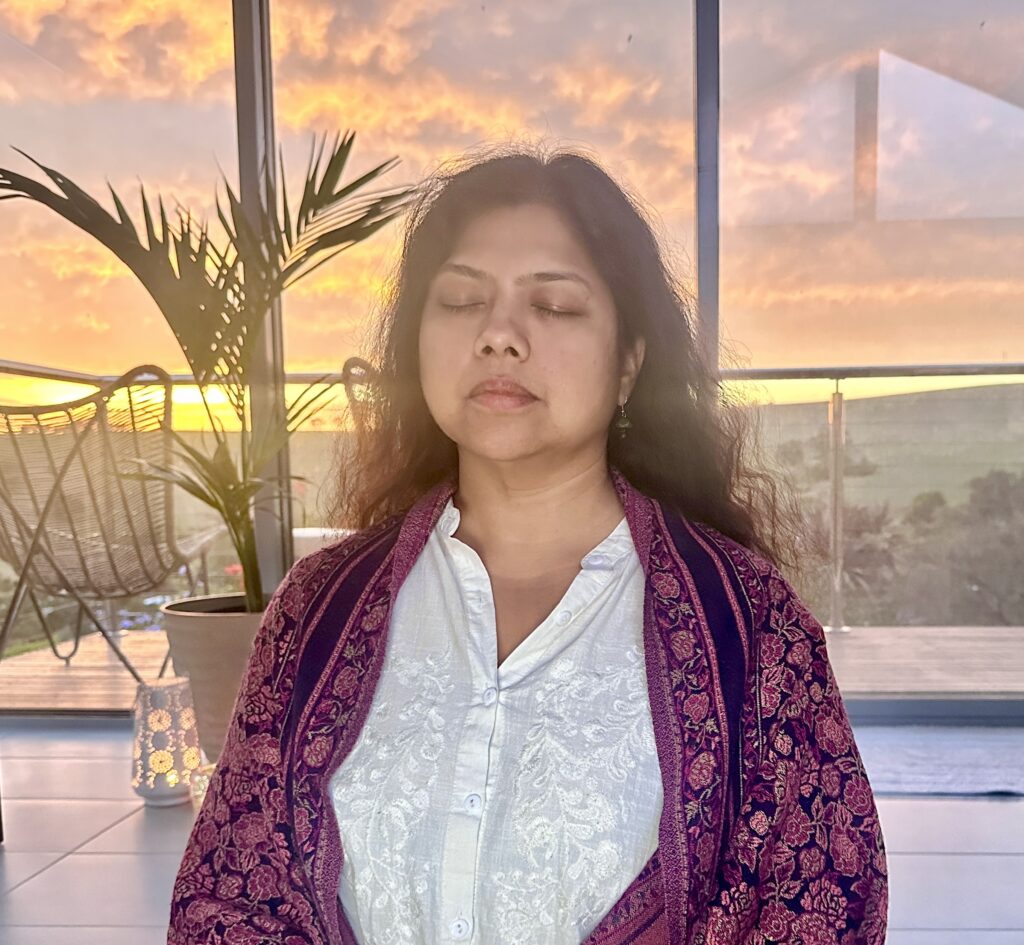
She has meditated for years. She can sit in stillness for 24 hours. She has learned to rise beyond body consciousness, to let internal sounds and visions pass without attachment, to know the difference between pain, which is sensation and suffering, which is the story we add to it.
By every measure, she is an accomplished practitioner.
And yet, she is emotionally disturbed.
The blind spot no one talks about
Here is what I have come to understand after years of working with coaches, therapists, healers, and practitioners of every kind.
Many of us were drawn to this work in the first place because of our own unresolved pain.
Abandonment. The feeling of being a misfit. Social anxiety. A deep longing to be understood.
We found our way to ancient practices : meditation, yoga, breathwork and they offered something real.
Relief. Stillness. A sense of finally being on the right path.
And they are powerful. I would never diminish them.
But here is the truth that is rarely spoken plainly:
The part of you that sits for meditation is not the part of you that is emotionally disturbed.
Think of it this way. You can dress impeccably for an occasion even when everything behind closed doors is in pieces. The composed, spiritually-oriented self can show up fully for every practice and the hidden self, the wounded one, the one that flinches when a family member dismisses you, remains completely untouched. Unseen.
A blind spot.
Eventually, if you sit long enough, perhaps over many years – everything must surface.
The depth of sustained practice does reach these places, in time.
But most of us are not in isolation 24 hours a day. We are living 99% of our lives, and giving perhaps 1% to formal practice.
That 1% cannot carry what it is being asked to carry.
Three paths forward
I am not asking you to abandon your practice. I am asking you to consider whether it is reaching the part of you that most needs to be reached.
There are three ways I see people move through this:
- The Long Way. Sustained, deepening practice over years and decades. For those with the disposition and the patience, it works. But life is happening right now. You are aging. Your parents are aging. Your children are growing. The question is not whether this path leads somewhere true – it does.The question is what passes by while you are walking it.
- The Rubber Band Way. Every time something uncomfortable arises, a trigger, a reaction, a knot in the chest – you sit with it. You walk with it. You run with it. You feel it without fleeing. And then you return. Rinse and repeat. Over time, the grip loosens. This is honest, steady work.
- The Third Way. This is the approach I have found to be the most profound, and the one I want to share with you. Rather than working around the wounded identity, you connect to it directly. You find it. You meet it. And you resolve it – not over years, but in the moment it is seen. For good.
If the Third Way speaks to you, I would like to offer you the chance to experience it.
There is another way. It is always available.
It opens only when you are open to it.
Love
Manna